
3 Days in Fiji: A Homestay, a Village, and a Lesson I Won’t Forget
Key Takeaways
- Fiji offers a rich cultural experience, with friendly locals, beautiful landscapes, and affordable options for visitors.
- The journey included transportation logistics, a homestay, and traditional practices like bringing Kava root as a gift.
- Highlights of the trip featured a six-hour ferry ride, delicious meals, and engaging with diverse guests at the homestay.
- Exploring the island included a village visit, enjoying local treats, and a memorable beach walk.
- The experience taught valuable lessons about cultural differences and open-mindedness, emphasizing the importance of seeing individuals beyond stereotypes.
Fiji
What do you think about when you hear someone say they are going to Fiji? I used to imagine a small island with a few very exclusive resorts that cost thousands a night. Well, that part is correct, but what I didn’t realize is that it is rich in culture, affordable, more accessible than one would think, and even more beautiful than any photograph taken. Fiji is full of incredibly friendly people that take life just a little less seriously than most. As Queen Rania of Jordan once said, “We shouldn’t judge people through the prism of our own stereotypes,” and nowhere has that been more true for me than here. I am going to take you through our 3-day journey through Fiji in a way most don’t. I have also prepared a free guide to walk you through doing what we did, or at least set you on that path.
Arriving in Fiji
This trip was part of an annual/bi-annual trip to Australia to visit family. I already wrote a post about how I booked it; you can read that here. I am going to start us off at landing in Fiji on a Monday morning at around 6 AM local time. Customs was as easy as expected (or as I hoped) and we were waiting for our bags.
As you may know, I am very anti-check-a-bag and we packed only carry-ons, but Fiji Airways has a very low 7kg weight limit for carry-ons, so we were forced to check. They came out quickly and we headed out to the main airport area.
I had elected not to pre-book transportation to the ferry terminal. They all left earlier than I felt comfortable committing to, and my research promised there would be ample options at the airport to get us there. That proved correct and we were off on our 20-minute drive with a very nice gentleman from a transportation company in the airport.

The Gift: Kava Root
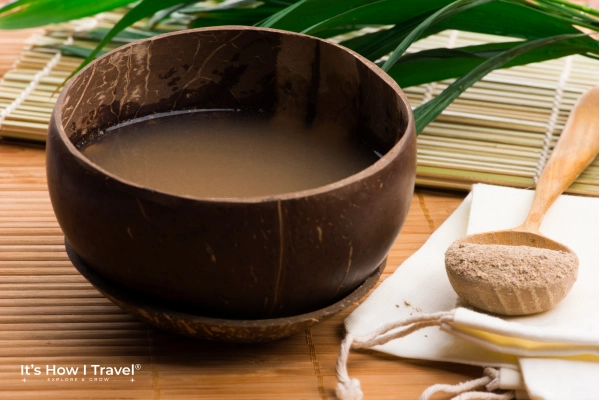
We spent two of the three nights in Fiji at a homestay where the family members were part of a village. When visiting the village itself, it is tradition to bring a gift of Kava root to the chief of the village. Thanks to Amanda’s research, we asked our driver if he would help us find one, and he was happy to, as he was aware of the tradition and knew right where to go.
The Ferry Journey: Yasawa Flyer
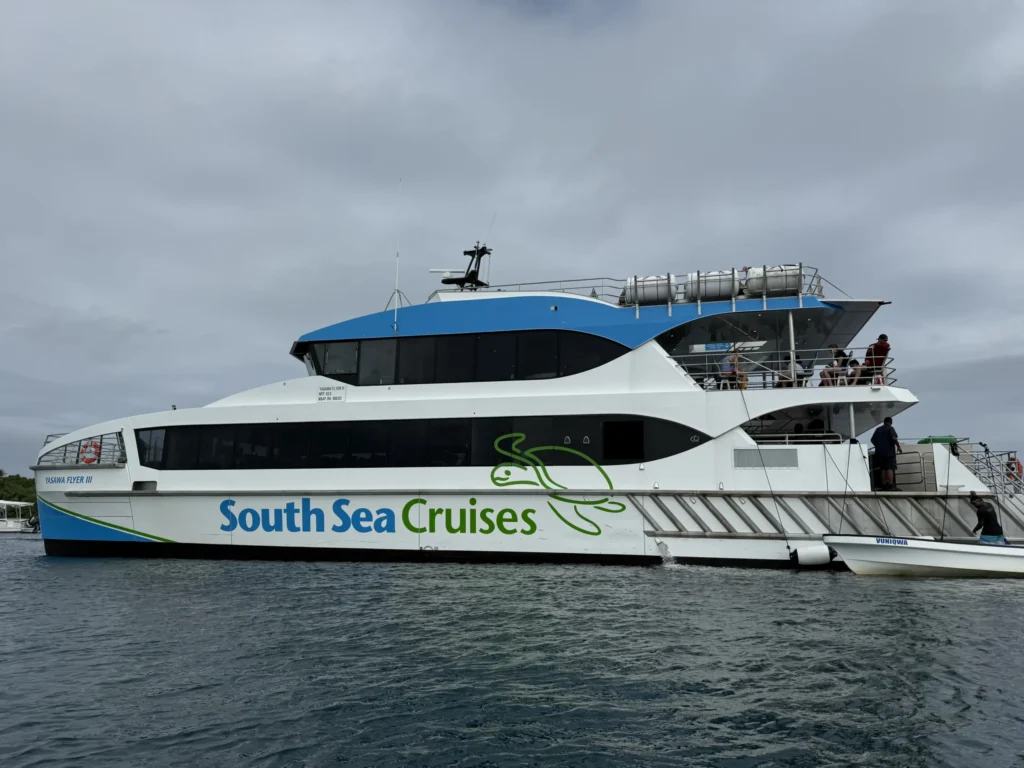
After purchasing our gift, we arrived at Port Denarau to board the Yasawa Flyer. We would be on this ferry for close to six hours as we headed to Nanuya Lailai Island. When we boarded, the crew took down the name of our homestay and would contact them when we got close, as they needed to pick us up in a small boat to continue the journey.
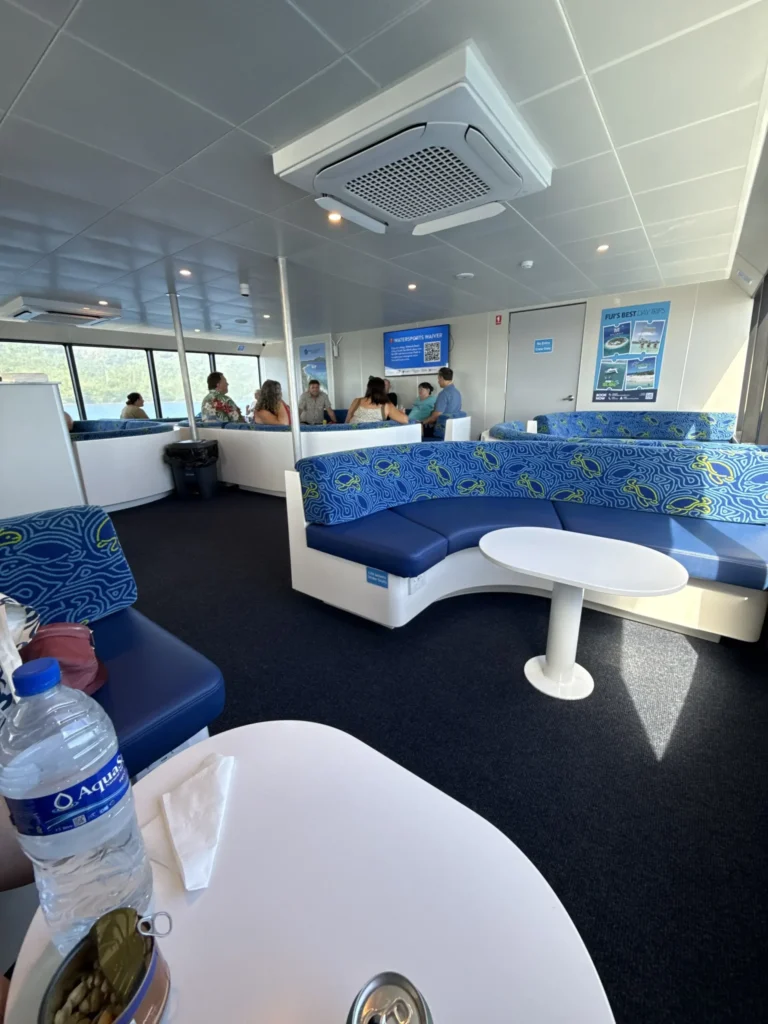
I had spent about $25 USD each to upgrade us to the Captain’s Lounge on the boat. It was a large room on the second floor with comfortable seating and ice-cold A/C. Drinks, including beer and wine, were complimentary, as well as snacks. We spent the time recharging our devices and ourselves while talking to a few different groups of people off to very different adventures on different islands.
We were the only ones we talked to that were not partaking in the resort life. The just under six hours went by easily, and we then boarded our small fishing boat and headed to our home for the next 48 hours.
The Homestay: Arriving on the Island
We arrived safely at the homestay, climbing out of the boat into ocean water about an inch below the knee. When I say ocean water, I mean the type that is as clear as glass that you see on a screensaver. To add to that, it was about 85°F.
We were warmly greeted by a husband and wife, Johnny and Elie. It was later learned that the village was Elie’s family and Johnny had moved there years ago to help with farm work, as he was a farmer by trade. We chatted for a few minutes learning the layout of the area. It was explained that everyone ate three meals together at set times and they would take note of any allergies or dietary restrictions. They cooked and prepared all meals. As much as I wanted to list the vegetables I don’t like, we told her we had no allergies and were grateful to eat what was prepared. Moments later, we were presented with a late lunch (it was around 2 PM at this point) of vegetable fried rice. It was fantastic.
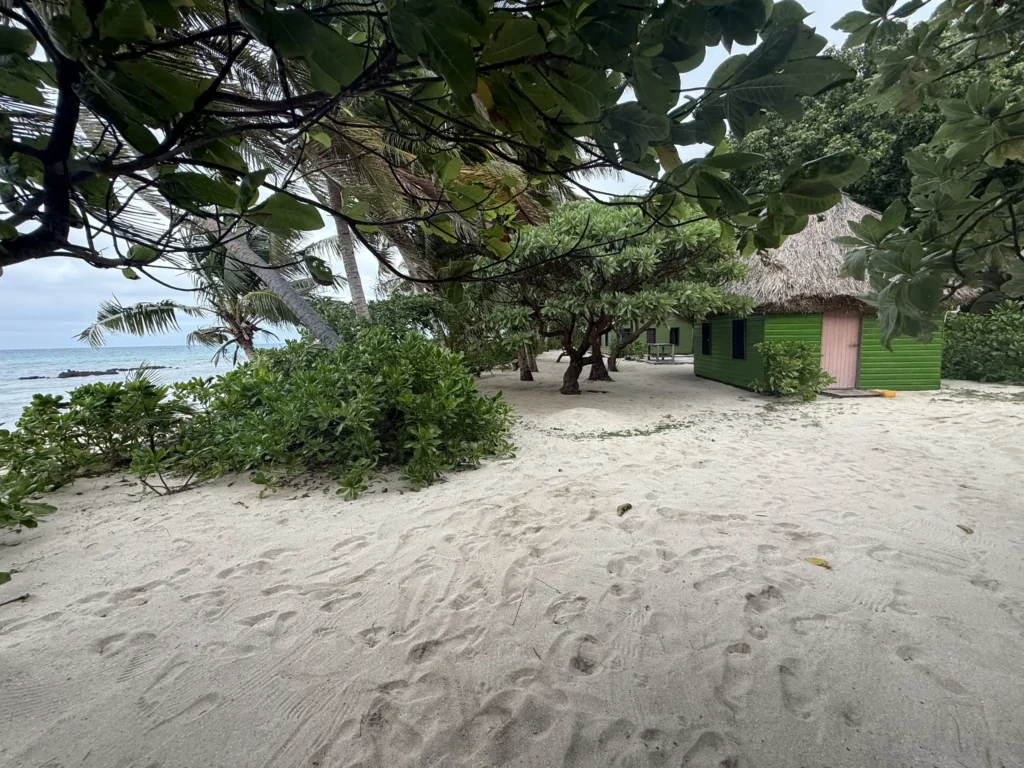
We headed to our thatched roof hut with running water but no electricity. The bed was comfortable and two large windows faced the ocean, which not only gave us a wonderful breeze but also the most calming view you could dream up. We changed, set an alarm for dinner, and took the world’s best nap.
Dinner and Meeting the Guests
Dinner came around and we headed back to the larger building, which sat about 200 feet from our hut. Ours was one of four and all were occupied with other guests. We sat down and met our temporary family:
- A young couple from The Netherlands, in the middle of their journey around the world. They had just been to Australia and were listing the countries ahead of them.
- A family of three from Melbourne, Australia, a husband, wife, and their 18-month-old baby, just in Fiji for a short visit.
- A mother and her two teenage daughters from Arkansas, US. We spent the majority of our time over the next two days with them. More on that in a moment.
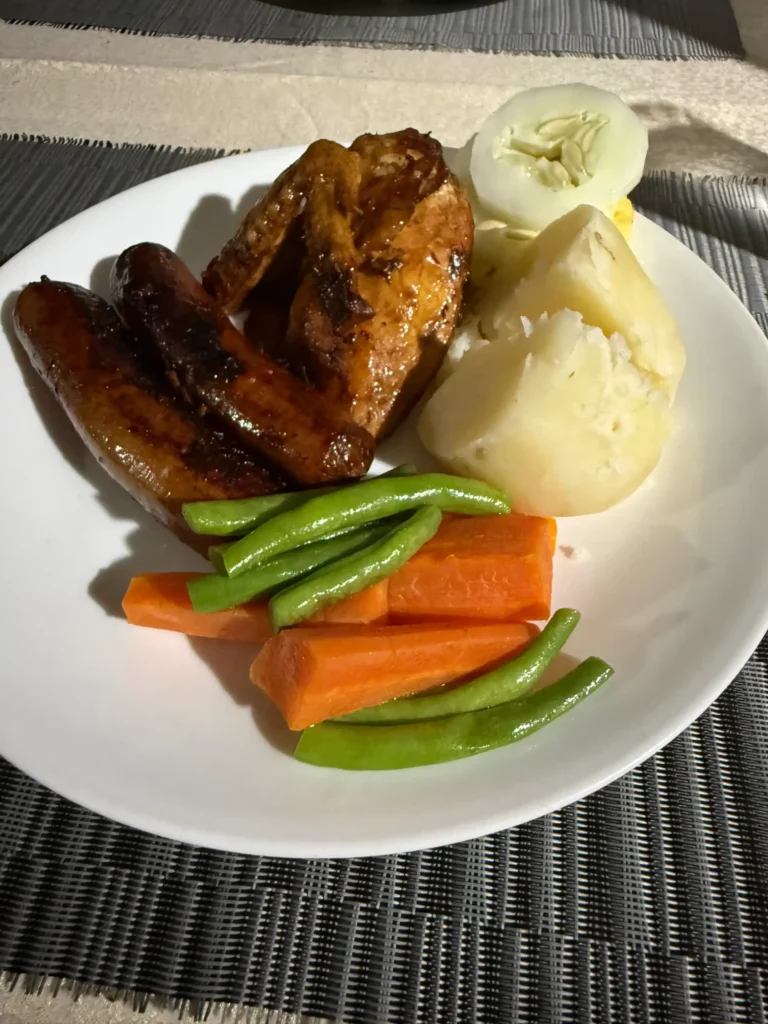
Dinner was a roasted chicken with vegetables and was just as excellent as lunch. It was time to head back to the hut for another nap, this one for 8 to 10 hours.
Homestay Day 2: The Village, the Tea House, and the Walk
This was our first and only full day at the homestay, as day three required us to take the only ferry back to Nadi (the main island and home of NAN airport). We woke up and headed to breakfast, which consisted of fruit, pancakes, coffee or tea, and orange juice. It was exactly what I needed and wanted, and a great start to the day. We had no agenda, but it ended up being a jam-packed, culture-filled, wonderful day.
The Village Visit
As breakfast wrapped up, Johnny asked us and the other American family if we were ready to head to the village. The day prior we had mentioned we would like to go, as it was displayed on their “things to do” board as an option for $50 Fijian each. We agreed, grabbed some sunscreen, and met Bill, Elie’s brother who had picked us up the previous day from the ferry, at the fishing boat. Amanda was provided a skirt, which was required for women entering the village.
The full village story requires its own article, which I promise to write soon. For now, our story continues a few hours later when we arrived back at the homestay.
The Tea House and the Best Donuts in Fiji
Amanda and I wanted a beach day but also wanted to explore the little island we were on. We were told it was about an hour walk to the other side and back. One route would take us past a Tea House where we were told the best donuts in Fiji were made. We headed that way with a backpack full of towels, sunscreen, and water.
We found the small tea house with a lovely lady and her kitten, Donut. We ordered two coffees (Fiji does this well, perhaps due to their proximity to Australia, who most don’t realize are coffee masters) and two donuts. We then headed on our hike through the jungle.
The Walk Across the Island
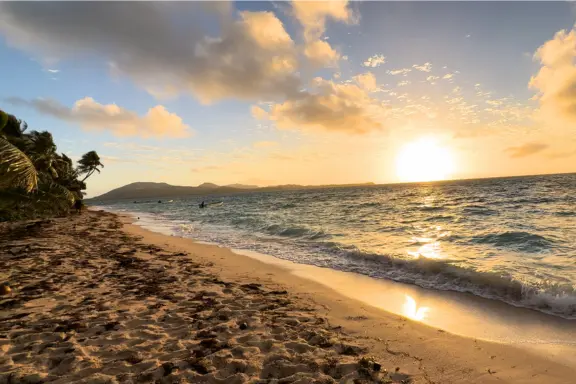
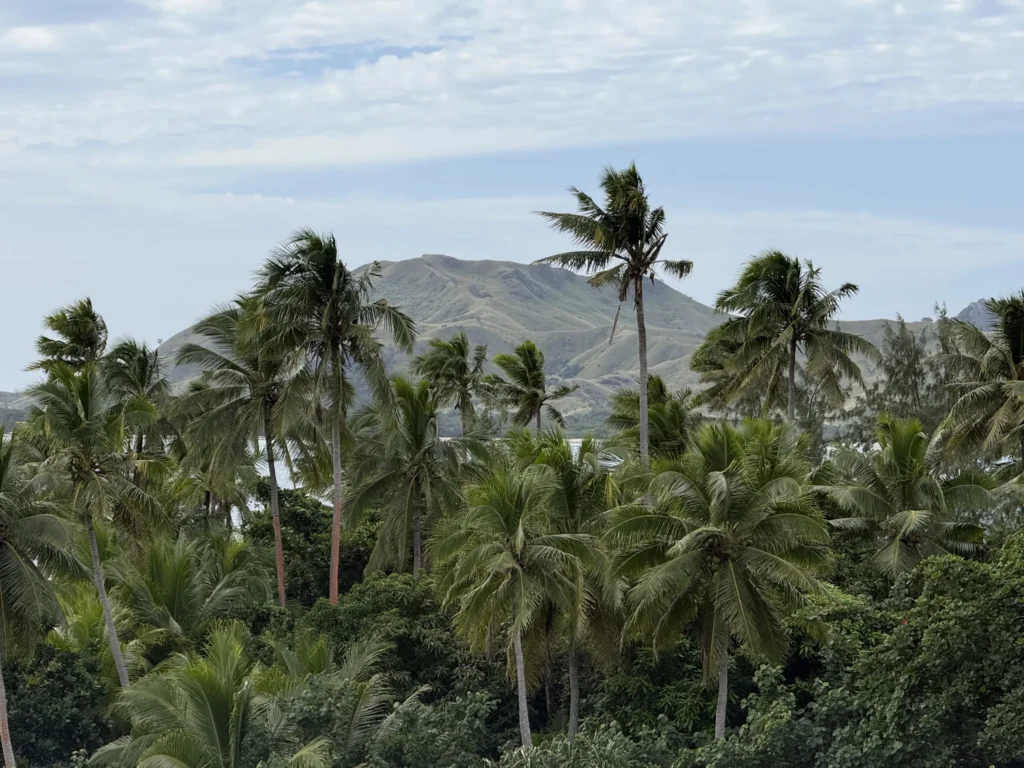
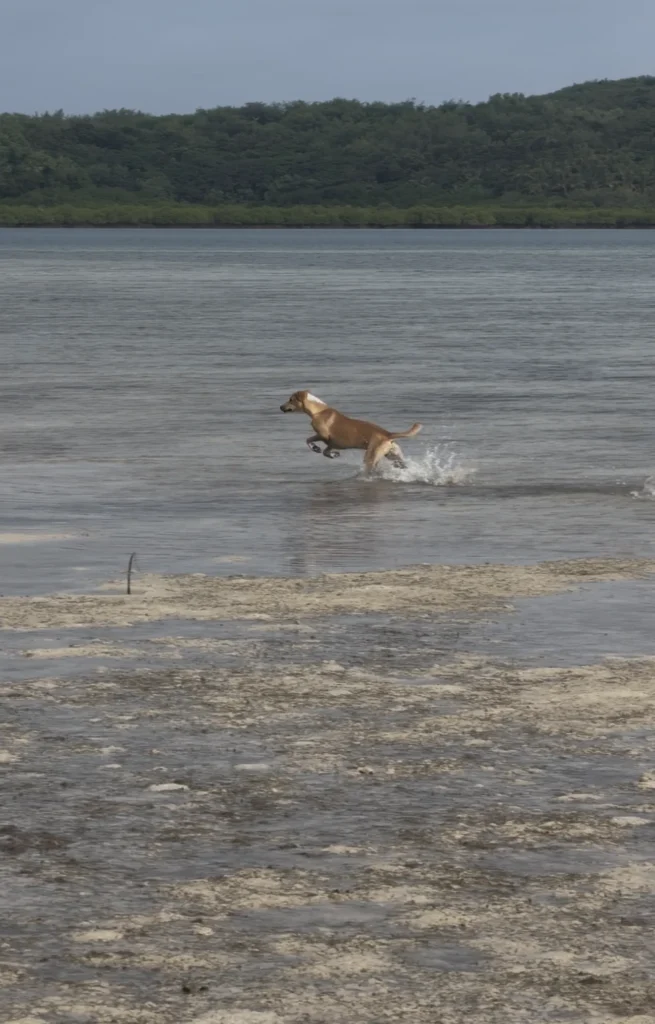
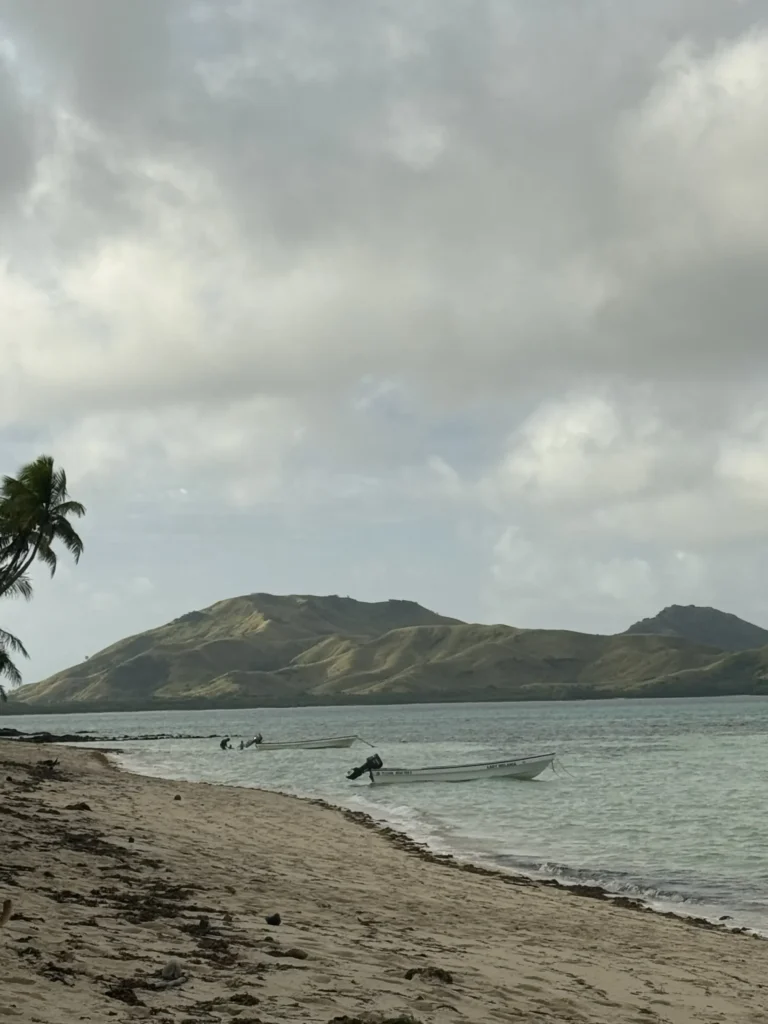
The walk through the middle of the island to the other side came with views that can’t be put into words, and even the photo below doesn’t do justice. There was a clear path to follow, as there was a small resort on the other side as well as a private part of the island for a local chartered yacht to dock and let their passengers off. It took about 40 minutes and we arrived. We sat on a very quiet beach with no one around but a stray dog that had followed us for the last few minutes.
I asked a local as we passed the private beach if it was possible and safe to walk back along the beach instead of through the woods. In broken English, and with a half translation from a second person, I got the idea that it was, but to make sure we did it before 4 PM when the tide came in.
Racing the Tide
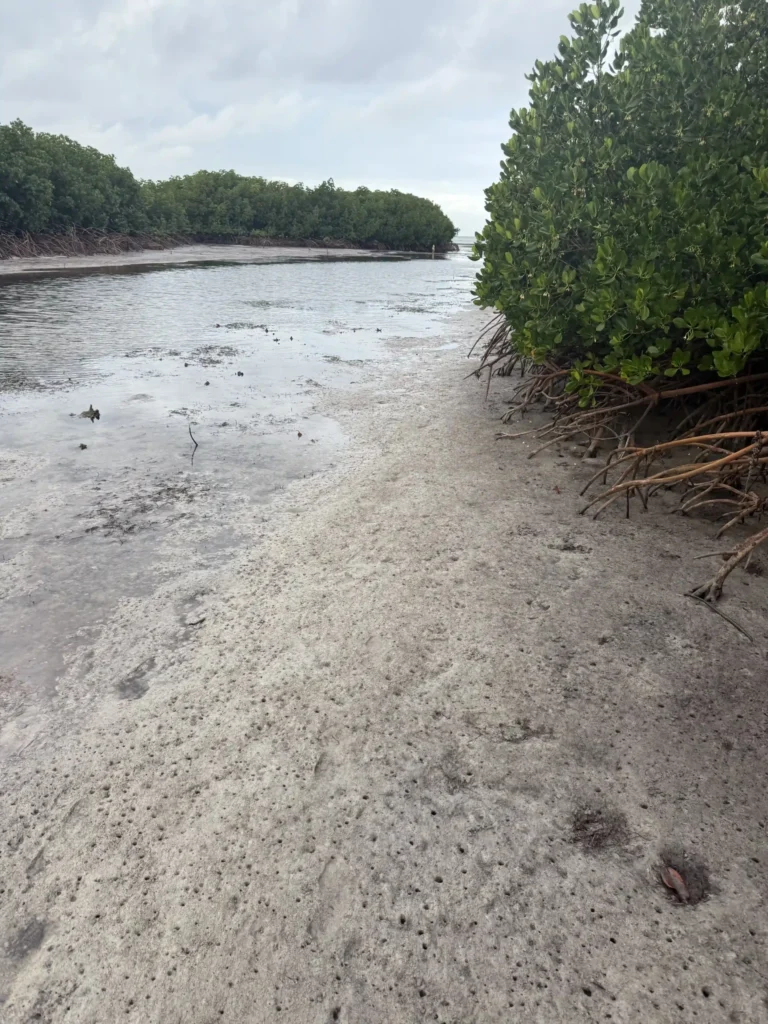
As four o’clock approached, we quickly packed up and walked along the beach, the dog in tow. As our journey continued down the shore, we watched the water rise. We were now in a predicament where we had to press on because going back would be no better. Keep in mind, while the water was rising, it was calm for the most part, and both of us are very strong swimmers. In the event we didn’t beat the tide, we would either swim our way around in waist-deep water or find a place on the beach and WhatsApp our hosts for an embarrassing pickup request.
Homestay Day 3: Heading Home
We continued forward and used our new four-legged friend as a guide, as she seemed to know exactly where to step. Prior to that, we had ended up stepping in mud that sank me down at least six inches. I was able to pull my foot out and save my water shoe. Amanda, on the other hand, while she didn’t get stuck, was only wearing flip flops that did not work well navigating underwater rocks. Finally, we made it back, uninjured and with a bit of a story to tell. A fresh fish dinner was enjoyed, followed by a very restful sleep.
Our final day was here. We ate breakfast and took a dip in the ocean on the Blue Lagoon side of the island, calm and warm, a perfect contrast to the adventure the open ocean side had given us the day before. I snorkeled for about half an hour and then we packed up, said goodbye, and took the reverse journey back to Nadi.
Once we arrived back at the port, our driver awaited us. I had prearranged it with the same driver who took us to the port a few days earlier. He took us to a resort nearest the airport, where we had cashed in on some Hilton points. All we needed was a comfortable bed and a meal, and they delivered. The next morning at 4:30 AM, our driver awaited and off to the airport we went, with Brisbane our next stop to relax with family.
Final Thoughts: What Fiji Taught Me
When someone asks what you did last week and you respond with “visiting some family in Australia after a quick stop to stay with a Fijian family on a rural island in Fiji,” it can come off a bit pretentious. That said, while yes, it did take a few dollars to make it happen (a lot less than you may think), it was not what people think of as a getaway to Fiji. It was, however, beautiful, eye-opening, educational, peaceful, relaxing, and a lot of fun.
I learned, or was reminded of, a few important things.
Everyone’s lifestyle is different. Some live their lives completely differently from your own. They may live in such a way that you think to yourself, “I could never.” Keep in mind, if they had the same opportunity to see how you live your life, they may well feel the exact same way. They have what they need and are happy. All of this will make more sense when my article about the village is ready.
The second important thing I was reminded of is this: no matter where someone lives, their government and their neighbors do not dictate their beliefs or their ability to be open-minded. I am not talking about the Fijians; I am talking about our friends from Arkansas. I have been there. I have spent over a month collectively in many parts of the state. Arkansas has a reputation of not being the most open-minded. Whenever a news outlet posts stats around racism or education, the Natural State doesn’t often rank high.
With all that said, this family wasn’t a stat on a list. They were wonderful people on a journey to explore the good in the world and meet others looking to do the same. People are not their government, and people are not always what our preconceived notions, or even previous interactions, would lead us to believe. People are individuals, regardless of where they are from, who they are related to, or who governs their homeland.
Remember that as you travel far or even at home. Learn about the person and learn about their home, but through their lens. It is a lesson I must remind myself of often, especially in the world we live in today.
I’ll leave you with this, in my own words:
The reputation of a place is not the character of its people.
Planning Your Own Fiji Escape?
Everything you just read came from a real trip to a remote island in the Yasawa chain. I took every ferry booking, transfer, and cultural detail I figured out along the way and put it into a free, step-by-step guide so you can skip the guesswork and book with confidence.
- Step-by-step booking, from your flight to the ferry to the island
- How to get from Nadi airport to the port without the stress
- The cultural custom that matters when you visit a Fijian village
- A complete, pack-light checklist for every leg of the journey
Drop your email below and I’ll send it straight to your inbox.
Fiji can be much more affordable than most people expect. Staying at a homestay instead of a resort significantly cuts costs, and experiences like village visits and island hikes are low-cost or included with your stay.
The Yasawa Flyer is a passenger ferry that travels from Port Denarau on the main island of Viti Levu to the Yasawa and Mamanuca island chains. It is a common and affordable way to reach outer islands without flying.
Kava is a traditional root drink with cultural significance throughout the Pacific Islands. When visiting a Fijian village, it is customary to present Kava root to the chief as a sign of respect before entering.
Fiji Airways has a carry-on weight limit of 7kg, which is lower than many international carriers. If you are a light packer, be aware that you may be required to check your bag even if it fits in the overhead bin.
A Fiji homestay typically means staying with a local family, eating meals together, and participating in daily life. Accommodations can be simple, such as a thatched roof hut with running water but no electricity, but the experience and connection more than make up for the lack of amenities.