New Orleans Travel Guide: History, Bourbon Street & Food
Let’s talk NOLA. If you have seen that abbreviation before and knew what it means, it simply stands for New Orleans, Louisiana. A city rich in history, full of great food, great people, and a very different world from what you are more than likely used to.
I have been there many, many times. When traveling for work, I visited the state of Louisiana countless times. I spent about two months in Alexandria, and then a few weeks in many other cities such as Lafayette and Shreveport. New Orleans is just different. I’ll explain.
History
I want to spend some time on the history of New Orleans, and not just because it’s relevant to this article (it is). I genuinely believe its story is one of the most important in the history of the United States. The country would not look the way it does today without New Orleans. Not even close. Yes, Boston, Philadelphia, and others shaped the nation in the mid- to late 1700s and broke us free of King George. But New Orleans and Louisiana gave us the West.
In the early 1800s, the young United States was pushing west across the Appalachian Mountains, and farmers on that new frontier depended on one thing above all: the Mississippi River. It was their highway to the world. Crops floated downriver and were loaded onto ocean-going ships at a single crucial port: New Orleans.
Whoever controlled that port held the American frontier in its hands. For years, a weak Spain owned Louisiana and allowed Americans to ship through New Orleans. Then, in 1800, Napoleon Bonaparte quietly acquired the territory, hoping to rebuild a French empire in the Americas. Suddenly, a far more powerful rival controlled America’s lifeline.
President Thomas Jefferson sent James Monroe to Paris to join diplomat Robert Livingston, with orders to buy New Orleans and West Florida for up to $10 million. But Napoleon’s plans were falling apart. Yellow fever was ravaging his army in Saint-Domingue, and war with England was looming. He surprised the Americans by offering the entire Louisiana territory for $15 million. Although the deal went far beyond their instructions, Monroe and Livingston said yes.
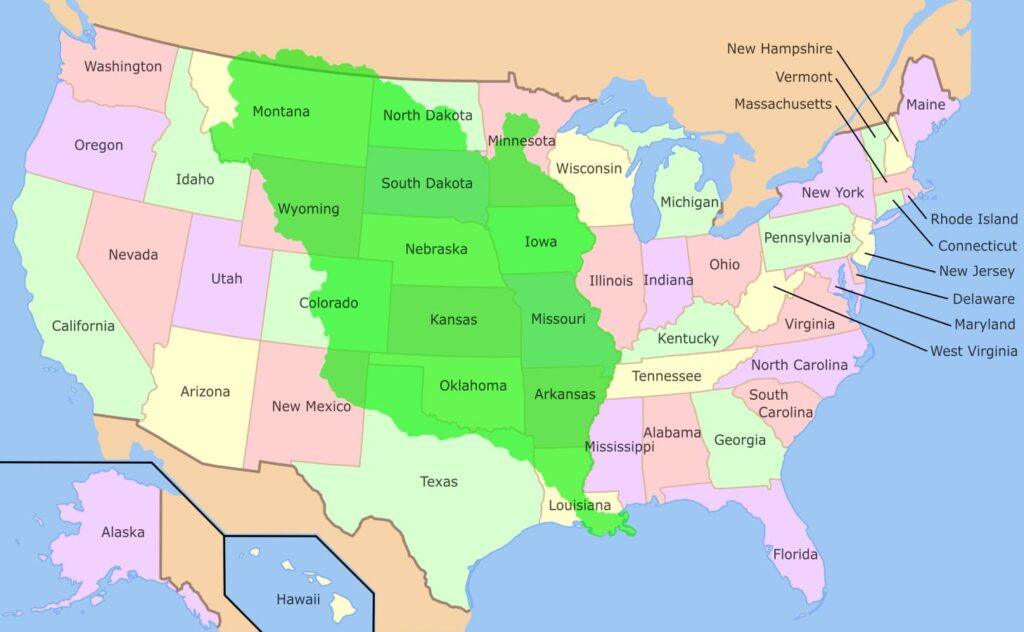
The Louisiana Purchase covered all or part of 15 present-day states. Arkansas, Iowa, Missouri, Kansas, Oklahoma, and Nebraska fell entirely within it, while parts of Louisiana (including New Orleans), Minnesota, North Dakota, South Dakota, Montana, Wyoming, Colorado, New Mexico, and Texas were included as well. It even reached into what are now the Canadian provinces of Alberta and Saskatchewan. In a single deal, the United States roughly doubled in size.
Yes, I love history, but I don’t usually go that in-depth in this blog, especially for US destinations. I did here because, when you visit, you feel that history and you taste the history. If you go to NOLA seeking only a Hurricane (a famous mixed drink) and partying on Bourbon St., you are missing out. Should you party on Bourbon St.? Of course, but my point is that there is so much more to understand.
Okay, you understand. Now let’s party on Bourbon St.
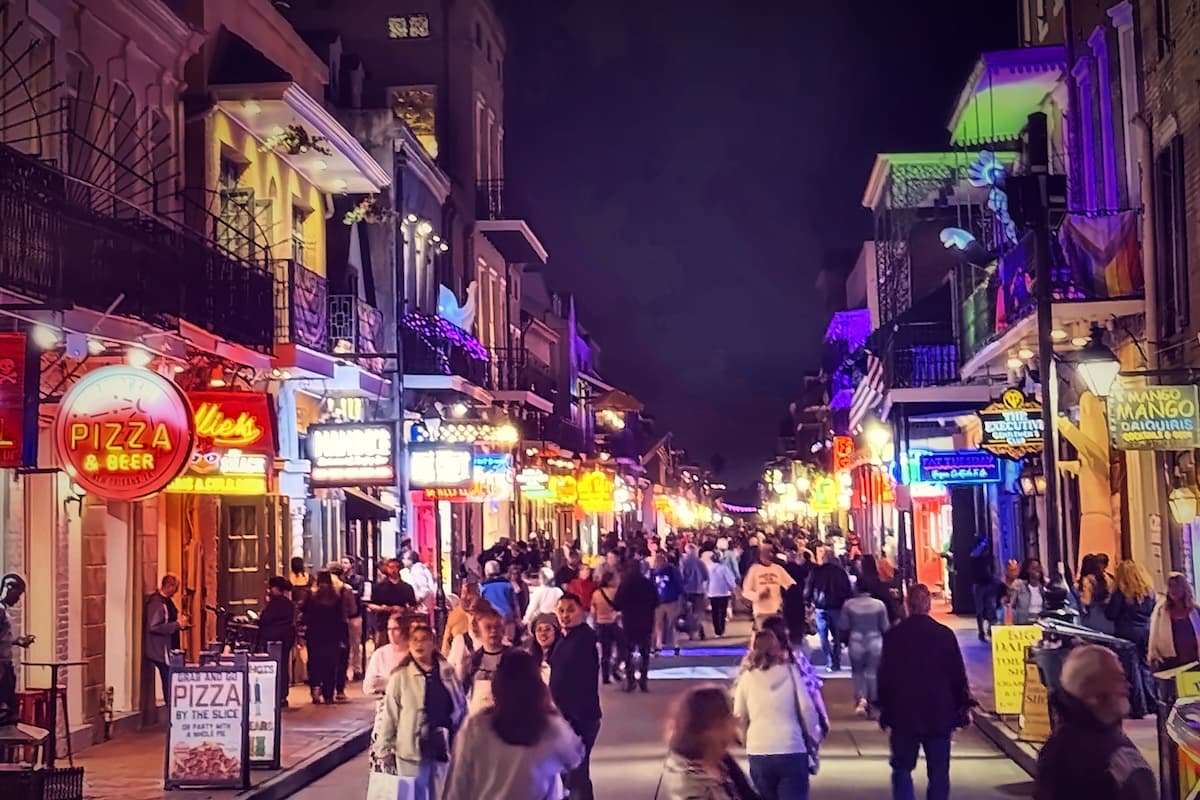
Bourbon Street is often considered the main street of attraction when visiting New Orleans. It is 13 blocks that sit in the heart of the French Quarter. I just googled “Bourbon Street New Orleans” to validate it was 13 blocks and noticed Google’s Gemini search states, “By Day: The street is relatively quiet, family-friendly, and ideal for admiring historic Spanish-influenced architecture, art galleries, and gift shops.”
Sorry, Google, I am going to disagree. I don’t know that Bourbon Street is ever exactly family-friendly. Yes, 12 noon on an average October afternoon may be a far better time to explore its history than 11 PM, but the street is still filled with bars, gentlemen’s clubs, and, well… “unique people.” I am not saying to completely avoid it, but calling it family-friendly is a stretch.
As I said, I have spent a lot of time in New Orleans and in that area, and it is always a very interesting, fun, and stimulating environment. I was there just a few weeks ago and walked most of those 13 blocks. Many bars have two floors with iconic balconies overlooking the street below.
I looked up and noticed a bartender leaning over the balcony in an attempt to wave people up. I took her up on the offer, as I both wanted a drink and found this a good opportunity to strike up a conversation, as it was clearly quiet up there. I was right, as I was the only one.
I asked her what time she would close tonight, and she told me it would all be based on business, and if it stayed this empty, probably around 11 or 12. As we continued to chat, she told me that on very busy nights she has worked from 6 PM to 6 AM, and once even 6 PM to 11 AM, until the next bartender arrived. They will not close if the crowds are there.
According to Louisiana alcohol laws, “the ability to sell alcohol, including wine, spirits, and beer, varies across the state. Most parishes in Louisiana permit 24/7 sales of alcoholic beverages.” Back to my feeling that family-friendly may not be all that fair of a statement.
Where to eat on Bourbon Street
Drinks are one thing, but where New Orleans and even Bourbon Street shine is the food! It’s a unique style of Creole and Cajun culinary dishes that just can’t be found elsewhere. I consider one of the best food destinations in the country.
One of my favorite places happens to be a bit of a tourist destination (not a tourist trap): Acme Oyster House. They are now a chain, but this is the original and a must-stop. The line may be long, but ask to sit at the bar; it will be quicker. They are famous for their chargrilled oysters, which are just magical.
Another is Felix’s, on the corner of Bourbon and Iberville St. Go to both and compare the oysters.
While Bourbon Street is the “Times Square” of NOLA, there are other areas that are a must:
Garden District
A leafy area of grand 19th-century mansions, manicured gardens, and oak-shaded sidewalks. It’s also home to Lafayette Cemetery No. 1 and easy access to Magazine Street shopping.
Faubourg Marigny
Just downriver from the Quarter, the Marigny is colorful and bohemian, with Creole cottages lining its streets. Frenchmen Street is the go-to spot for live jazz with a more local crowd.
Bywater
An artsy, laid-back neighborhood full of murals, brightly painted shotgun houses, and creative restaurants. Crescent Park offers riverfront walking paths with skyline views.
Tremé
One of America’s oldest Black neighborhoods and a birthplace of jazz, with deep roots in brass band and second-line traditions. Louis Armstrong Park and Congo Square anchor its rich cultural history.
Uptown
A large, residential stretch with stately homes, Audubon Park, and Tulane and Loyola universities. Magazine Street runs through it with miles of boutiques, cafes, and restaurants.
Mid-City
A local favorite centered around City Park, home to the New Orleans Museum of Art and its sculpture garden. Bayou St. John adds a scenic waterfront for strolling or kayaking.
Warehouse District
Former industrial buildings now house galleries, upscale restaurants, and museums, including the National WWII Museum. It sits next to the CBD, making it convenient for hotels and conventions.
Summary
This entire site is dedicated to traveling with culture top of mind and having a lot of fun along the way. While New Orleans, Louisiana, may not be everyone’s vibe overall, it truly fits the description of culture travel with the opportunity to have some fun.
Yes, it is dirty. Yes, there are parts of the city that are dangerous. Yes, the food is amazing. Yes, the people are great. I don’t want to live there, but the city will always have a place in my heart and always have room for a return weekend.
“There is no other place on earth even remotely like New Orleans. Don’t even try to compare it to anywhere else.” – Anthony Bourdain
Test Your Knowledge
How well do you know the Lithina and it’s history? Take this quick quiz and let’s see. Drop your name and email at the end if you want more travel stories like this one delivered to your inbox.

NOLA stands for New Orleans, Louisiana.
Not really. Even during the day, Bourbon Street is lined with bars and gentlemen’s clubs. Midday is a better time to explore its history and architecture, but calling it family-friendly is a stretch.
Bourbon Street runs 13 blocks through the heart of the French Quarter.
Many bars stay open as long as the crowds are there. Most Louisiana parishes allow 24/7 alcohol sales, and some bartenders work until 6 AM or later on busy nights.
New Orleans controlled access to the Mississippi River, the lifeline for farmers on the early American frontier. The push to secure the port led to the Louisiana Purchase in 1803, which roughly doubled the size of the United States.
The original Acme Oyster House in the French Quarter is famous for its chargrilled oysters. Felix’s, on the corner of Bourbon and Iberville, is another favorite. Try both and compare.
The Garden District, Faubourg Marigny, Bywater, Tremé, Uptown, Mid-City, and the Warehouse District each offer something different, from historic mansions and live jazz to murals, parks, and museums.
Frenchmen Street in the Faubourg Marigny is the go-to spot for live jazz with a more local crowd than Bourbon Street.